



When a child struggles with addiction, parents instinctively step in. They research endlessly, make phone calls, manage crises, and absorb consequences. Love demands action, and for many families, action becomes constant.
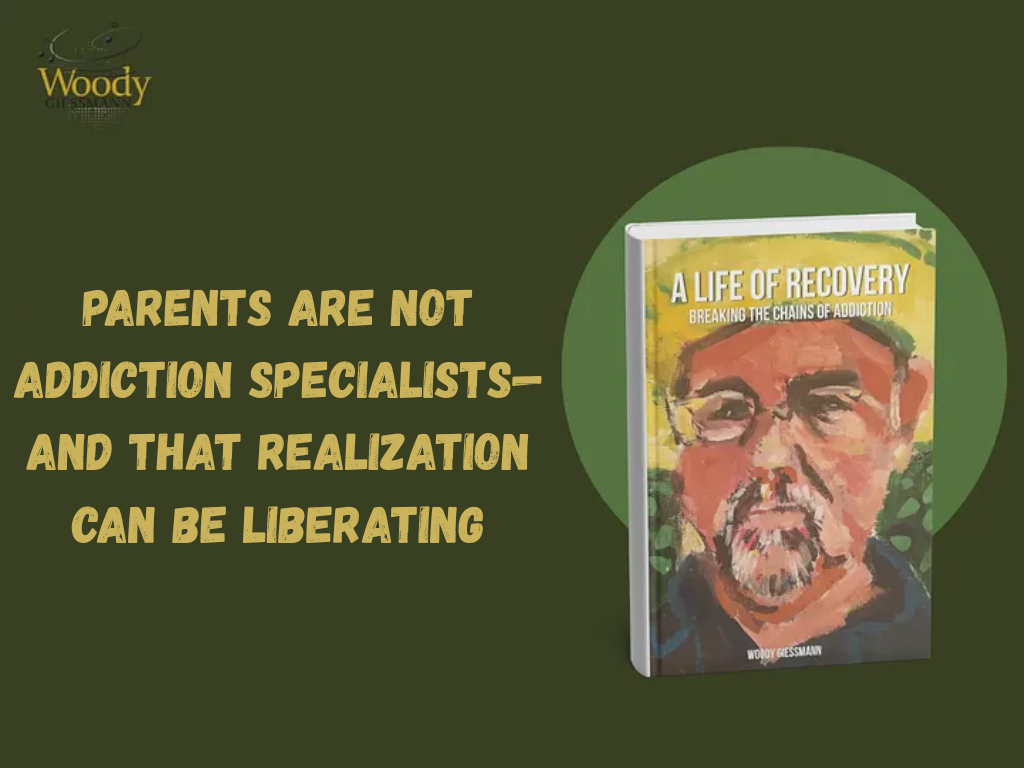
In A Life of Recovery – Breaking the Chains of Addiction, one of the most quietly transformative messages is this: parents are not addiction specialists, and homes are not treatment centers. While this idea can feel confronting at first, it ultimately brings relief.
The Pressure to Fix Everything
Parents often feel an unspoken responsibility to solve the problem. If they don’t, who will? This pressure intensifies when addiction is accompanied by mental health challenges, legal issues, or repeated relapses.
The book recognizes how overwhelming this role becomes. Parents are expected to make decisions they were never trained for—medical, psychological, and ethical—often while living in constant fear.
Over time, this responsibility takes a toll. Sleep disappears. Anxiety becomes chronic. Relationships strain under the weight of constant vigilance.
The book reframes this experience not as failure, but as overload.
Visit: https://woodygiessmannbooks.com
Why Expertise Matters
Addiction is complex. It involves neurobiology, trauma, mental health, and environment. When families try to manage it alone, they are often responding to symptoms rather than causes.
A Life of Recovery emphasizes the importance of professional assessment and appropriate levels of care. Addiction rarely exists without co-occurring mental health issues, and treating one without the other undermines recovery.
By seeking professional help, families are not giving up control—they are choosing accuracy.
The Role of Family in Recovery
Letting professionals take the lead does not mean families become irrelevant. On the contrary, the book emphasizes family involvement as essential.
Families are invited to shift roles—from managers to supporters, from rescuers to allies. This shift reduces conflict and restores healthier dynamics.
Rather than constantly reacting, families learn how to respond with intention. Communication improves. Boundaries become clearer. Emotional volatility decreases.
Releasing Guilt and Shame
Many parents carry deep guilt. They replay decisions, searching for the moment everything went wrong. The book gently dismantles this narrative.
Addiction is not caused by one mistake or one failure. It develops over time, shaped by many factors beyond parental control.
By releasing guilt, families free themselves to engage with recovery more honestly. Shame keeps people stuck. Understanding moves them forward.
Trusting the Process
One of the hardest adjustments for parents is trusting a process they cannot control. Professional treatment does not guarantee outcomes, and recovery is rarely linear.
The book does not promise certainty. What it offers instead is realism. Recovery requires patience, structure, and willingness from everyone involved.
Families are encouraged to focus on what they can control—their boundaries, their responses, and their own well-being.
A Shift That Changes Everything
When parents accept that they are not addiction specialists, something profound happens. They stop measuring themselves against impossible standards. They stop carrying responsibility that belongs elsewhere.
This shift does not reduce love—it refines it.
By stepping back from the role of fixer, families create space for real engagement. They model accountability, self-respect, and healthy limits.
A More Sustainable Way Forward
A Life of Recovery offers families permission to stop sacrificing themselves in the name of love. It invites them to seek support without shame and to prioritize stability alongside compassion.
Recovery is not something parents can force. But they can create conditions that make it possible.
And sometimes, the most loving thing a family can do is admit they cannot do it alone.