



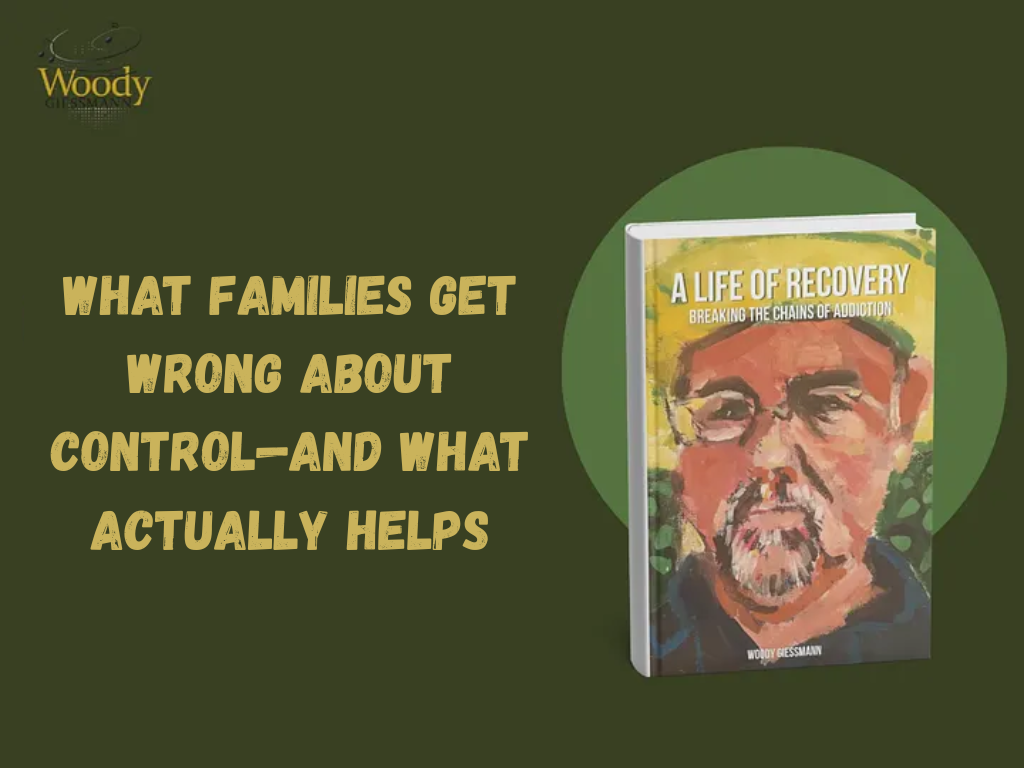
When addiction enters a family, control often follows. It doesn’t arrive as dominance or aggression. It arrives as vigilance. Parents watch closely. Questions multiply. Rules expand. Everyone becomes alert to the smallest shift in mood or behavior.
In A Life of Recovery – Breaking the Chains of Addiction, this impulse toward control is treated with compassion. It is not framed as a character flaw, but as a natural response to fear. When the stakes feel high, control feels like safety.
The problem is that control rarely produces the outcome families hope for.
Why Control Feels Necessary
Addiction creates unpredictability. Families lose trust in what tomorrow will look like. Control becomes a way to manage anxiety—to reduce uncertainty in an otherwise unstable environment.
Parents often believe that if they stay involved enough, monitor closely enough, and intervene quickly enough, they can prevent disaster. This belief is understandable. It is also exhausting.
The book acknowledges this tension honestly. Families are not wrong for wanting safety. But safety cannot be manufactured through constant control.
How Control Backfires
One of the clearest insights in A Life of Recovery is that control often produces resistance. When individuals feel monitored or managed, honesty decreases. Communication becomes strategic rather than open.
This dynamic fuels secrecy, which is the opposite of what recovery requires.
Control also shifts responsibility away from the person who needs to engage with recovery. Over time, families become managers while individuals remain passive or oppositional.
This imbalance deepens frustration on both sides.
The Difference Between Control and Structure
The book draws an important distinction between control and structure.
Control is reactive. It responds to fear. It escalates when anxiety rises. Structure, on the other hand, is intentional. It sets clear expectations and consistent boundaries without emotional volatility.
Structure allows families to step out of constant decision-making. Everyone knows the rules. Consequences are predictable. Drama decreases.
Most importantly, structure supports accountability without hostility.
Letting Go Without Abandoning
Families often fear that releasing control means abandoning their loved one. The book challenges this assumption.
Letting go of control does not mean letting go of care. It means allowing individuals to experience responsibility for their choices while remaining emotionally available.
This shift is difficult. It requires families to tolerate discomfort and uncertainty. But it also restores dignity—to both the family and the person struggling.
What Actually Supports Recovery
A Life of Recovery emphasizes that recovery is supported by clarity, consistency, and connection—not surveillance.
Families are encouraged to focus on what they can control: their boundaries, their responses, and their own well-being. This focus reduces power struggles and increases stability.
When families stop trying to manage outcomes, they become better supports for the process.
Control Keeps Families Stuck
One of the book’s most sobering observations is that control keeps families stuck in crisis mode. It prevents growth on all sides.
Parents remain anxious. Relationships remain strained. The household never stabilizes because it is constantly reacting.
By stepping out of control, families allow space for new patterns to form.
Trusting a Different Way
Trusting recovery does not mean trusting blindly. It means trusting a process grounded in professional support, education, and boundaries.
A Life of Recovery offers families permission to stop doing the impossible. They are not required to prevent every mistake or anticipate every risk.
What they can do is create an environment where accountability is clear and support is consistent.
Letting go of control does not guarantee recovery. But holding on to it almost guarantees exhaustion.
Sometimes, the most powerful thing a family can do is stop trying to steer—and start allowing change to emerge.