


Blog
Why Shame Keeps Families Stuck and Compassion Creates Change

Shame is one of addiction’s most powerful tools. It thrives in silence, grows in isolation, and convinces families that their struggles are personal failures rather than human experiences. In homes affected by addiction, shame often settles quietly, shaping how people speak, act, and think about themselves.
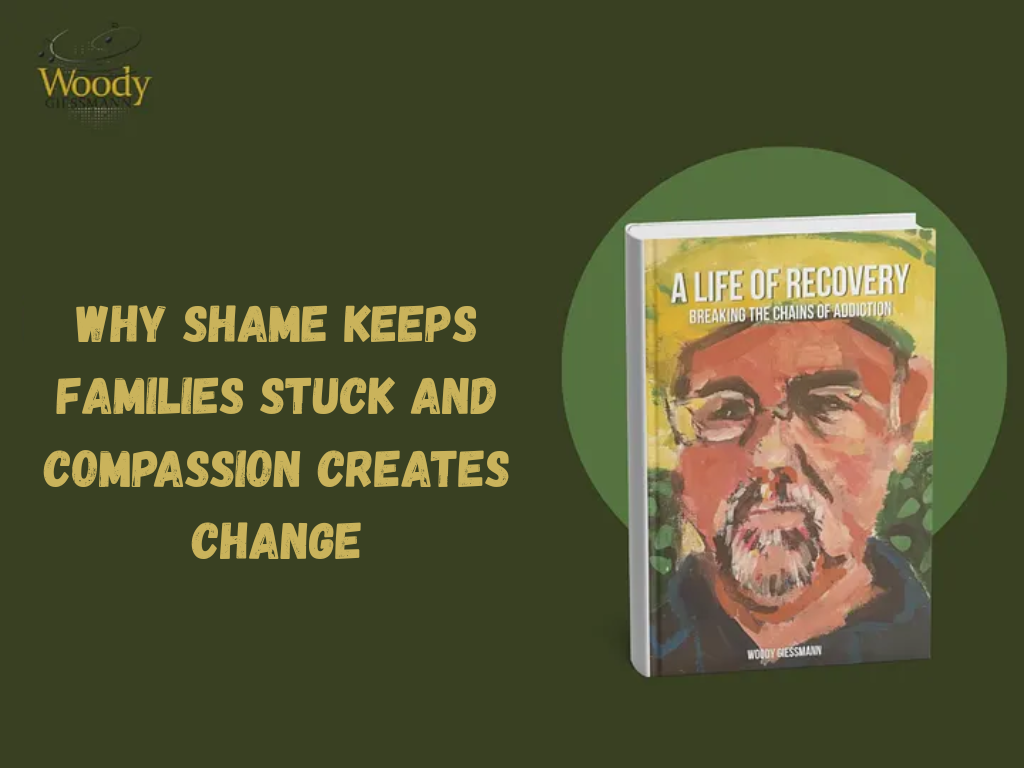
In A Life of Recovery – Breaking the Chains of Addiction, shame is identified not as a motivator for change, but as a barrier to it. The book challenges the idea that guilt, pressure, or fear can force recovery—and instead makes a case for compassion as a catalyst for healing.
How Shame Enters the Family System
Shame rarely arrives all at once. It accumulates over time. Parents begin questioning their competence. Siblings wonder if they matter. Individuals struggling with addiction internalize the belief that they are broken or beyond help.
This emotional climate affects how families communicate. Difficult conversations are avoided. Problems are minimized. Everyone works harder to appear “normal” from the outside.
The book recognizes this pattern as deeply human. Families do not hide because they are dishonest—they hide because they are afraid.
Visit: https://woodygiessmannbooks.com
Why Shame Doesn’t Work
One of the book’s clearest messages is that shame does not produce sustainable change. While it may temporarily suppress behavior, it deepens isolation and resistance. People who feel ashamed are less likely to ask for help, less likely to be honest, and more likely to hide.
The same is true for families. Shame keeps parents silent, afraid to reach out for support. It convinces them that asking for help means admitting defeat.
A Life of Recovery dismantles this belief by reframing addiction as a health issue, not a moral one. When families understand addiction through this lens, the emotional temperature shifts. Blame gives way to curiosity. Fear softens into concern.
Compassion Without Enabling
The book is careful to distinguish compassion from permissiveness. Compassion does not mean ignoring harm or avoiding boundaries. It means responding without cruelty or judgment.
Families often worry that kindness will be mistaken for weakness. The book challenges this fear. True compassion requires strength. It involves setting limits while maintaining respect. It involves telling the truth without shaming.
This balance allows families to support recovery without sacrificing themselves.
Changing the Conversation
When shame is removed, conversations change. Instead of accusations, there are observations. Instead of threats, there are boundaries. Instead of silence, there is dialogue.
The book emphasizes the importance of language. How families speak about addiction matters. Labels, tone, and assumptions shape how safe it feels to be honest.
By adopting a compassionate framework, families create an environment where recovery can take root.
Healing for Everyone Involved
Another powerful insight in the book is that shame affects caregivers as deeply as it affects those using substances. Parents often suppress their own needs, believing that focusing on themselves is selfish.
A Life of Recovery reframes self-care as essential, not indulgent. Families who address their own emotional health are better equipped to support recovery without resentment or burnout.
Healing is not a zero-sum game. One person’s recovery does not require another’s suffering.
Compassion as a Practice
Compassion, the book makes clear, is not a feeling—it is a practice. It involves consistency, patience, and self-awareness. It requires families to confront their own fears and beliefs.
This practice does not eliminate pain, but it changes how pain is carried. Instead of being buried, it is acknowledged. Instead of being weaponized, it is understood.
A Way Out of Isolation
Perhaps the most important role compassion plays is breaking isolation. Addiction thrives in secrecy. Recovery thrives in connection.
By replacing shame with understanding, families take their first step out of isolation. They begin to see that their experience is not unique—and that help is available.
A Life of Recovery offers families permission to stop hiding and start healing. Compassion is not a cure, but it is a doorway.
And for many families, opening that door changes everything.