



Burnout rarely announces itself. It builds quietly, disguised as responsibility. Parents stay alert at night. Conversations are replayed endlessly. Life narrows around one central concern: Are they okay today?
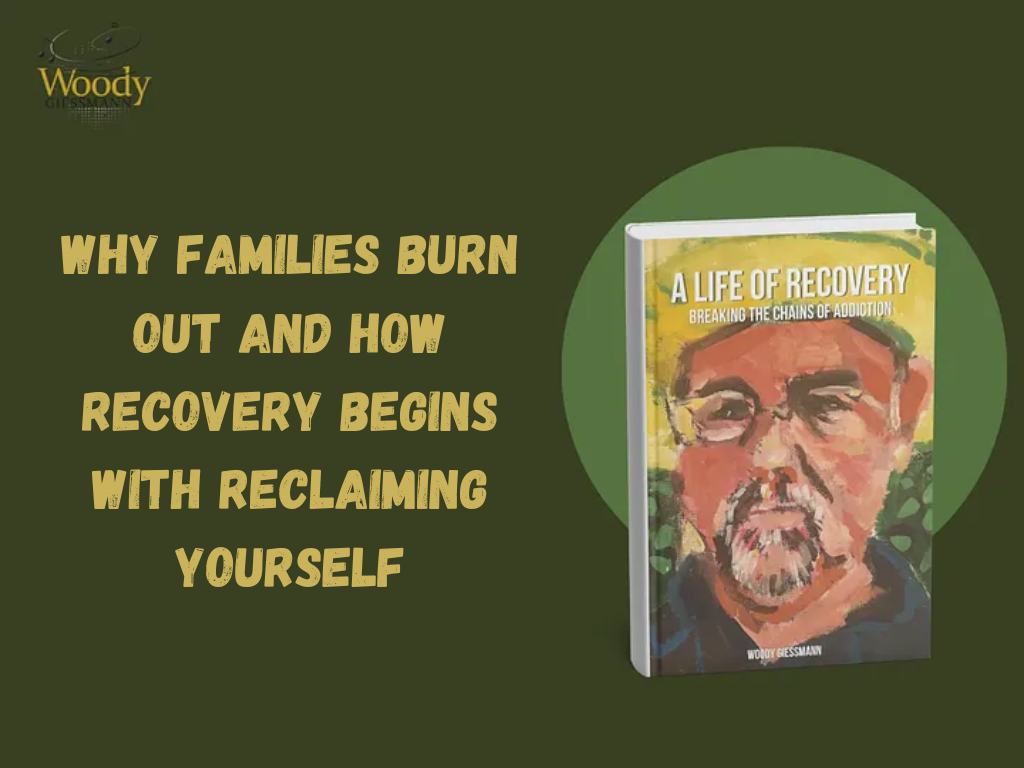
In A Life of Recovery – Breaking the Chains of Addiction, burnout is treated not as weakness, but as an inevitable outcome of prolonged crisis. When families live in constant vigilance, emotional exhaustion becomes the norm.
The book offers a perspective many families have never been given permission to consider: you cannot heal someone else while losing yourself.
How Burnout Becomes Normal
Families affected by addiction often normalize extreme stress. Over time, anxiety becomes background noise. Exhaustion becomes routine. Emotional numbness sets in as a form of protection.
Parents may stop recognizing their own needs altogether. Meals are skipped. Sleep is interrupted. Friendships fade. Joy feels inappropriate when someone they love is struggling.
The book names this experience without judgment. Burnout is not a failure of love—it is the cost of carrying too much for too long.
Visit: https://woodygiessmannbooks.com
The Myth of Self-Sacrifice
Many families believe that suffering proves devotion. The more they give up, the more they care. A Life of Recovery challenges this belief directly.
Self-sacrifice without limits does not heal addiction. It erodes the people trying to help.
When families abandon their own well-being, resentment builds beneath the surface. This resentment often emerges as anger, control, or despair—further destabilizing the household.
Why Family Recovery Matters
One of the book’s most radical messages is that family recovery is not optional—it is essential. Families do not need to wait for sobriety to begin healing.
By addressing their own emotional health, parents regain clarity. They become less reactive and more intentional. This shift often reduces conflict and restores a sense of balance.
Family recovery is not about turning away. It is about turning inward with honesty.
Reclaiming Identity Outside Addiction
Addiction has a way of consuming identity. Parents stop being individuals and become managers. Siblings become observers. Relationships shrink under the weight of constant concern.
The book encourages families to reclaim parts of themselves that were lost. Creativity, rest, connection, and purpose are not distractions—they are stabilizers.
When families reconnect with life outside addiction, they model something powerful: a future worth recovering for.
Boundaries Protect Energy
Burnout often stems from blurred boundaries. Without clear limits, families absorb every crisis, every consequence, every emotional swing.
A Life of Recovery emphasizes that boundaries protect energy. They prevent families from being pulled into chaos repeatedly. They allow caregivers to respond thoughtfully rather than reactively.
By conserving emotional resources, families become more sustainable supports.
Letting Go of Hypervigilance
Hypervigilance feels necessary when risk is real. But when it becomes constant, it damages mental health.
The book encourages families to step out of constant monitoring and into structured support. Professional care, education, and shared responsibility reduce the need for hypervigilance.
Letting go does not mean not caring—it means trusting a process that does not rely solely on fear.
Recovery Begins with Permission
Perhaps the most important step in family recovery is permission—the permission to rest, to seek help, and to matter.
A Life of Recovery gives families language for this permission. It reminds them that caring for themselves does not mean abandoning their loved one. It means staying whole.
Burnout does not disappear overnight. But when families reclaim themselves, recovery becomes something shared rather than endured.
And sometimes, that is where healing truly begins.