



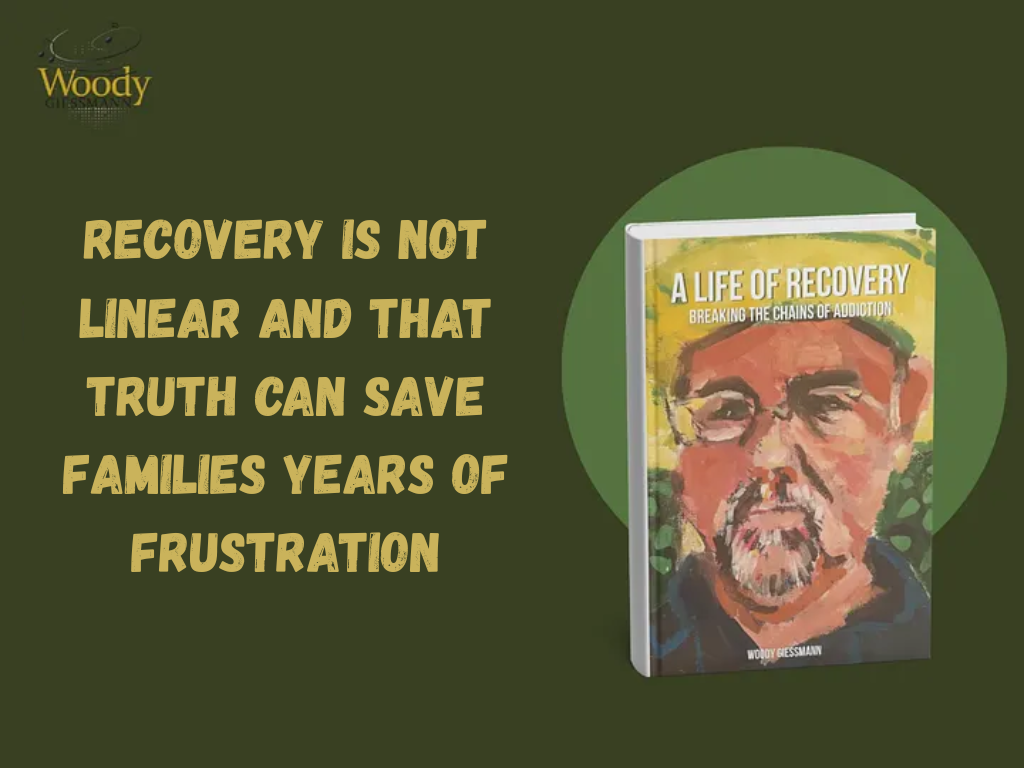
One of the most damaging myths about recovery is that it moves in a straight line. Get help, stop using, return to normal. Families often cling to this belief because it offers certainty in a situation filled with fear.
In A Life of Recovery – Breaking the Chains of Addiction, recovery is presented very differently. It is described as a journey—uneven, unpredictable, and deeply human. Understanding this truth, the book suggests, can spare families years of frustration and self-blame.
The Expectation of Quick Results
When families finally seek help, they often expect visible change. Treatment begins, and hope surges. Parents watch closely for signs that things are “working.” When progress stalls or setbacks occur, panic sets in.
The book acknowledges how painful this cycle is. Families invest emotionally in recovery, and when outcomes don’t match expectations, disappointment turns inward. Parents wonder what they did wrong. Individuals in recovery feel like failures.
This expectation of linear progress creates pressure that undermines healing.
Visit: https://woodygiessmannbooks.com
Why Setbacks Are Part of the Process
A Life of Recovery reframes setbacks not as proof of failure, but as information. Recovery involves learning new ways to cope, regulate emotions, and respond to stress. This learning takes time.
Substances often served as primary coping tools. Removing them without replacing the underlying skills leaves people vulnerable. Relapse or regression does not erase progress—it highlights where more support is needed.
By understanding this, families can respond with clarity rather than panic.
The Cost of Perfectionism
Perfectionism shows up in recovery in subtle ways. Families look for total abstinence, complete honesty, and immediate stability. Anything less feels dangerous.
The book challenges this mindset gently. Perfectionism fuels shame. Shame fuels secrecy. Secrecy fuels relapse.
Recovery thrives in environments where honesty is safer than appearing “fixed.”
Supporting Progress Without Controlling It
One of the book’s most valuable contributions is helping families distinguish between support and control. Support involves encouragement, boundaries, and accountability. Control involves monitoring, micromanaging, and reacting to fear.
Families are encouraged to step back from constant evaluation. Progress is not measured by flawless behavior, but by increased awareness, engagement, and responsibility.
This shift allows individuals in recovery to take ownership of their process.
Patience as a Skill
Patience is not passive waiting. The book frames patience as an active skill—one that requires boundaries, education, and support.
Families learn to tolerate uncertainty without collapsing into crisis. They learn to respond rather than react. These skills are as important for family recovery as they are for individual recovery.
When Families Heal Alongside Recovery
One of the book’s core messages is that families must heal alongside their loved one. When families remain stuck in crisis mode, they unintentionally reinforce instability.
By focusing on their own recovery—through support groups, education, and self-care—families create a more stable environment. Stability does not guarantee sobriety, but it makes growth possible.
Redefining Success
A Life of Recovery invites families to redefine what success looks like. Success may mean seeking help. It may mean honesty after a relapse. It may mean setting a boundary that protects the household.
When success is measured realistically, families experience less despair and more resilience.
Recovery is not about returning to who someone was before addiction. It is about becoming someone new—together.
Understanding this truth does not eliminate pain, but it gives families a map. And sometimes, having a map is enough to keep going.